Prefabricated & Modular Building Blog
Latest industry updates, technical insights, and buying guides on portable cabins, containers, and cold storage units.
Portacabins & Site Office Solutions
Discover best practices and custom configurations for relocatable site offices and modular staff quarters.
Flat Pack Cabin Assembly & Logistics
Explore rapid deployment techniques and cost-efficient modular housing options for remote work sites.
2026 Top Custom Aluminium Fabrication Suppliers Worldwide
Table of Contents
- Material Fundamentals: Aluminium’s Density Is About 2.70 g/cm³
- Fabrication Methods: Pure Aluminium Melts at 660.3°C
- Supplier Capabilities: Compare Processes, Certifications and Global Reach
- 2026 Worldwide Supplier Landscape: Assess Regional Strengths and Specialties
- Circularity: IAI Estimates Nearly 75% of All Aluminium Ever Produced Remains in Use
- FAQS
- Conclusion
- Related Posts
Custom Aluminium Fabrication turns an engineering drawing into a component that must fit, perform, and arrive on schedule. In 2026, choosing a supplier involves more than comparing prices. Buyers need to understand each company’s equipment, material experience, quality controls, and ability to support a project from prototype to production. Small details matter. A bracket’s bend radius, an enclosure’s wall thickness, or a weld’s visible finish can affect both assembly and appearance.
This guide to 2026 Top Custom Aluminium Fabrication Suppliers Worldwide offers a practical starting point for comparing providers. It focuses on capabilities buyers can verify, including cutting and forming processes, machining options, surface treatments, inspection practices, and production capacity. It also highlights questions worth asking before requesting a quote: Can the supplier review a drawing? How are tolerances checked? Are finish samples available? Clear answers help set realistic expectations. They do not guarantee a perfect fit.
No shortlist can replace a project-specific review. A supplier suited to high-volume parts may not be the right partner for a one-off prototype. Specifications can also change, and communication sometimes gets messy. Share current drawings, material requirements, expected quantities, and delivery targets, then confirm important details in writing. Where possible, review a sample or inspection record before approving a larger run. The best choice is not always the most familiar name; it is the supplier whose verified capabilities match the part, budget, and timeline.
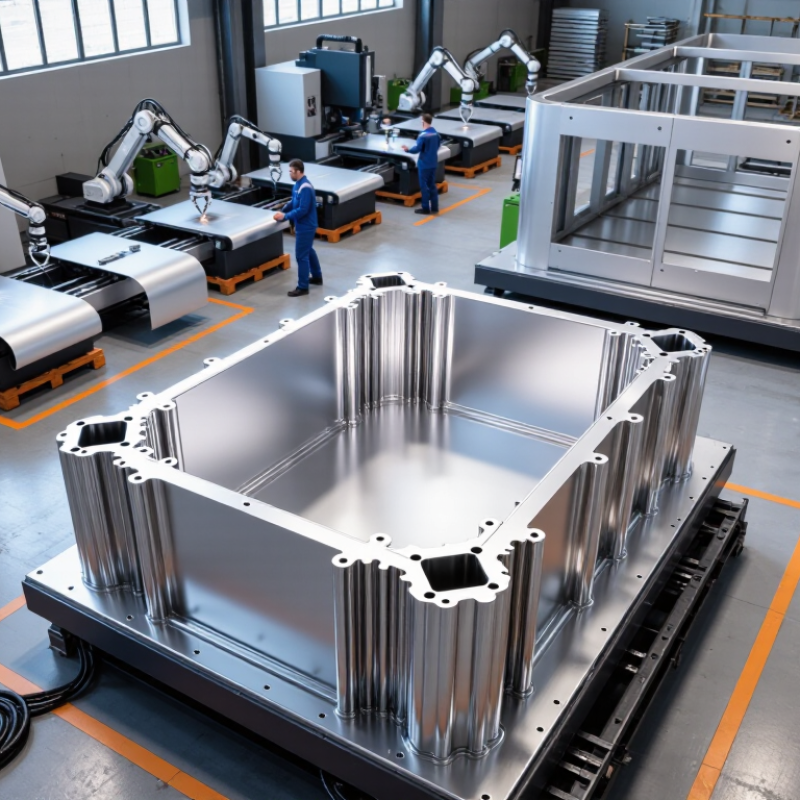
Material Fundamentals: Aluminium’s Density Is About 2.70 g/cm³
Aluminium’s density is about 2.70 g/cm³, making it a useful starting point for estimating component weight. A flat sheet measuring 1 metre by 0.5 metre by 3 millimetres has a volume of 0.0015 m³. At this density, its approximate mass is 4.05 kilograms. A quick estimate. Actual parts may weigh less after cut-outs, or more with attached hardware and finishes.
For custom fabrication, density helps teams compare material use and plan lifting, packaging, and transport. It does not tell the whole design story. Wall thickness, shape, alloy, and manufacturing tolerances all affect the finished part. Aluminium alloys can vary slightly in density, so calculations should use the supplier’s specified material data when accuracy matters. A common planning mistake is treating a theoretical sheet weight as the final assembly weight. It is an easy assumption to make, but not always a reliable one. Ask suppliers to clarify whether their quoted weight includes brackets, coatings, and joining components.
Fabrication Methods: Pure Aluminium Melts at 660.3°C
Pure aluminum melts at 660.3°C, according to reference data from the National Institute of Standards and Technology. That number is useful, but it is not a universal shop setting. Most fabricated parts use alloys, whose melting ranges vary with composition. A casting team therefore checks the material specification before setting furnace temperatures. Small difference. Big consequences.
For custom aluminium fabrication, melting matters most in casting and repair welding. Extrusion billets are heated until they soften, not until they become liquid; machining removes material without melting it. In casting, operators monitor the melt, remove surface oxides carefully, and avoid unnecessary overheating. Excess heat can increase oxidation and complicate quality control. A bright, clean-looking surface is not proof of a sound melt.
Scale makes process discipline important. The USGS Mineral Commodity Summaries 2025 estimates global primary aluminium production at about 72 million metric tons in 2024. Suppliers handle many grades and product forms, so a precise temperature record alone cannot guarantee a reliable component. Ask how the supplier verifies alloy identity, furnace readings, and inspection results. I would not treat 660.3°C as a production recipe; it is a reference point, and confusing the two is an easy mistake.
2026 Top Custom Aluminium Fabrication Suppliers Worldwide — Fabrication Methods: Pure Aluminium Melts at 660.3°C
This chart compares the approximate melting points of selected pure metals. Pure aluminium melts at 660.3°C; actual aluminium alloys have composition-dependent melting ranges. These reference values can help illustrate thermal considerations in metal fabrication.
Supplier Capabilities: Compare Processes, Certifications and Global Reach
A useful supplier comparison starts with the part, not a broad claim of “full-service” production. Ask whether the shop cuts, bends, welds, machines, and finishes aluminium in-house. A thin enclosure may need precise laser cutting and clean bends, while a structural frame may depend on weld control and fixture design. Request a sample inspection report, including dimensions, surface condition, and any agreed tolerances. Details matter.
Certifications can indicate documented processes, but check their scope, site, and expiry date. A certificate does not prove that every part will meet your drawing. Ask how the supplier controls material grades, tracks batches, and handles nonconforming parts. For global reach, compare export experience, packing methods, shipping routes, and response times across time zones. A capable factory may still be a poor fit if replacement parts take weeks to arrive. I would also verify capacity with a realistic production schedule; quoted lead times can look better than actual ones.
Tips: Send the same drawing and forecast to each supplier. Compare process steps, inspection records, and delivery assumptions side by side. Ask for a first-article review before scaling up. Small gaps in your specification can cause costly rework.
2026 Worldwide Supplier Landscape: Assess Regional Strengths and Specialties
Custom aluminium suppliers differ by more than price. Asian manufacturing hubs often offer broad extrusion, casting, and finishing capacity. European suppliers are frequently assessed for tight tolerances, process documentation, and lower-carbon material options. North American shops may suit buyers needing close engineering collaboration and established transport-sector experience. These are useful starting points, not guarantees; capabilities vary by facility.
The International Aluminium Institute reported about 72.8 million tonnes of global primary aluminium production in 2024, with China contributing roughly 43 million tonnes. The U.S. Geological Survey’s 2025 Mineral Commodity Summaries gives a comparable picture. These figures describe primary metal, not custom fabrication output. Scale matters. But it is not proof. A large regional supply base cannot confirm a supplier’s tooling accuracy, finishing quality, or delivery reliability. Request sample inspection records and clarify who performs each production step.
Tips: Match the region to the job. Ask for alloy and temper traceability, dimensional inspection methods, and finishing samples from the actual production site. For a small trial order, compare communication and revision handling, too. Supplier directories can be outdated; verify current equipment and capacity directly.
| Region | Common Fabrication Strengths | Typical End Markets | Regional Advantages | Buyer Considerations |
|---|---|---|---|---|
| East Asia | High-volume extrusion and machining; sheet-metal fabrication; surface finishing; integrated component production | Electronics, transportation, construction, industrial equipment | Broad manufacturing ecosystems, extensive supplier networks, and capacity for both standard and customized components | Confirm tooling ownership, process controls, material traceability, and inspection requirements, especially for multi-tier supply chains |
| Japan | Precision machining, close-tolerance components, formed parts, and quality-focused production | Automotive, machinery, electronics, and specialized industrial applications | Established precision-manufacturing expertise and strong emphasis on process consistency | Clarify production volumes, qualification lead times, documentation, and capacity for export or high-mix orders |
| South Asia | Extrusions, machining, fabricated assemblies, and growing capabilities in engineered components | Construction, rail, automotive, energy, and general engineering | Large manufacturing workforce and a developing base of domestic and export-oriented suppliers | Assess supplier-specific capabilities, alloy availability, finishing quality, and logistics arrangements rather than relying on regional averages |
| Western and Central Europe | Engineered extrusions, precision machining, structural assemblies, and application-specific fabrication | Automotive, rail, machinery, building systems, and renewable energy | Strong engineering support, established technical standards, and proximity to major industrial customers | Check applicable product standards, energy and sustainability documentation, and the cost implications of local production |
| Southern Europe and Türkiye | Architectural profiles, window and façade systems, extrusion-based parts, and industrial fabrication | Construction, building products, transportation, and machinery | Experience serving construction markets and access to regional manufacturing and export routes | Specify coating or anodizing requirements, dimensional tolerances, packaging, and destination-market compliance |
| North America | Custom extrusions, CNC machining, sheet and plate fabrication, welded assemblies, and domestic prototyping | Aerospace, transportation, construction, energy, and industrial equipment | Access to large end markets, established technical infrastructure, and opportunities for regional sourcing | Verify alloy and temper certification, industry-specific approvals, production capacity, and total landed cost |
| Mexico | Machining, extrusion-based components, formed parts, and assembly for export manufacturing | Automotive, appliances, electronics, and industrial equipment | Geographic proximity to North American customers and participation in cross-border manufacturing supply chains | Review customs classification, origin documentation, supplier quality systems, and cross-border delivery plans |
| Brazil and South America | Extrusions, architectural products, general fabrication, and components for local industry | Construction, transportation, agriculture, energy, and industrial markets | Regional production options for local demand and access to established aluminum-industry activity | Assess local alloy and finishing availability, import exposure for specialized inputs, and delivery requirements across the region |
This is a qualitative regional overview, not a ranked supplier list. Capabilities vary by facility and project; verify certifications, materials, tolerances, capacity, and delivery performance directly with each prospective supplier.
Circularity: IAI Estimates Nearly 75% of All Aluminium Ever Produced Remains in Use
The International Aluminium Institute estimates that nearly 75% of all aluminium ever produced remains in use. That is a remarkable measure of the metal’s long service life, not proof that every piece is easy to recover. A window frame may stay in a building for decades. A transport component may pass through several owners before replacement.
That matters. For custom fabrication, circularity starts with practical design choices. Clear alloy identification, accessible fasteners, and separable components can make future recovery less difficult. In a workshop, keeping clean aluminium offcuts apart from mixed materials also helps preserve their value. These details are not glamorous. They can still change what happens to production scrap.
Suppliers worldwide can support circular use by documenting material grades, reducing avoidable cutting waste, and discussing repair or reuse during design reviews. Buyers should ask how offcuts are handled and whether product information follows the part. Not automatically. A high in-use share does not mean recycled feedstock is always available or suitable for every specification. Nor does “recyclable” guarantee that a component will be collected. The estimate is encouraging, but it also invites a harder question: are today’s fabricated parts designed to remain useful, and recoverable, tomorrow?
FAQS
Asian hubs often provide broad extrusion, casting, and finishing capacity. European suppliers may emphasize tight tolerances and process records. North American shops may offer close engineering collaboration. These are starting points, not guarantees.
No. Global primary aluminium production reached about 72.8 million tonnes in 2024, with China contributing roughly 43 million tonnes. Those figures describe primary metal, not fabrication quality. Scale is not proof.
Ask for alloy and temper traceability, dimensional inspection methods, and finishing samples from the actual production site. Check who handles each manufacturing step. Request sample inspection records, too.
Compare communication, revision handling, and delivery updates. A quick, clear response can matter. It still does not guarantee consistent production quality.
Nearly 75% of all aluminium ever produced is estimated to remain in use. A window frame may serve for decades. That figure does not mean every item is easy to recover.
Identify the alloy clearly, use accessible fasteners, and make components easier to separate. These details can help later sorting. Not glamorous, but useful.
Keep clean aluminium offcuts separate from mixed materials. Suppliers can document material grades and discuss cutting waste during design reviews. Small habits matter.
No. Collection, material suitability, and clear product information all affect recovery. Recycled feedstock may not fit every specification. “Recyclable” is not the same as recovered.
Conclusion
This guide to Custom Aluminium Fabrication explains why aluminium is widely chosen for components and structures: its density is about 2.70 g/cm³, offering a useful balance of low weight and practical performance. It also introduces key fabrication methods and notes that pure aluminium melts at 660.3°C, a material property that informs processing choices. When evaluating suppliers, buyers should compare their available processes, relevant certifications, production capacity, quality controls, and ability to support projects across regions.
The 2026 worldwide supplier landscape reflects differing regional strengths and areas of specialization, so the right partner depends on a project’s design, volume, finish, and delivery needs. Sustainability is another important consideration. Aluminium can be recycled, and the International Aluminium Institute estimates that nearly 75% of all aluminium ever produced remains in use. Together, material fundamentals, manufacturing capabilities, supplier reach, and circularity provide a practical framework for assessing fabrication options.

Blog Tags: