0%

Choosing reliable Construction Hoarding Panels suppliers requires more than comparing prices or attractive product photographs. Contractors need panels that protect worksite boundaries, support clear branding, and remain stable through changing weather. A loose panel, faded graphic, or delayed delivery can disrupt an otherwise organized project.

This guide reviews ten suppliers with attention to practical performance and documented capabilities. The evaluation considers panel strength, surface finish, wind resistance, fire-related specifications, printing quality, customization, delivery coverage, and after-sales support. It also considers whether suppliers explain installation requirements clearly. That detail matters.

Real project experience can reveal weaknesses that brochures often hide. A supplier may offer excellent graphics but limited stock. Another may provide durable boards but slow communication. No supplier is perfect. Regional building rules, site conditions, and recycling expectations can also change the final decision.

The selected companies represent different manufacturing approaches and market strengths. Some focus on high-volume construction programs, while others serve retail developments, infrastructure projects, or premium urban sites. Their suitability depends on your location, budget, schedule, and risk controls.

This overview is not a permanent verdict. Supplier performance can change with materials, capacity, and management. Readers should verify current certifications, samples, warranties, lead times, and installation guidance before placing an order. That extra check may prevent an expensive mistake. The strongest choice is usually the supplier that combines consistent quality, honest communication, and dependable delivery.
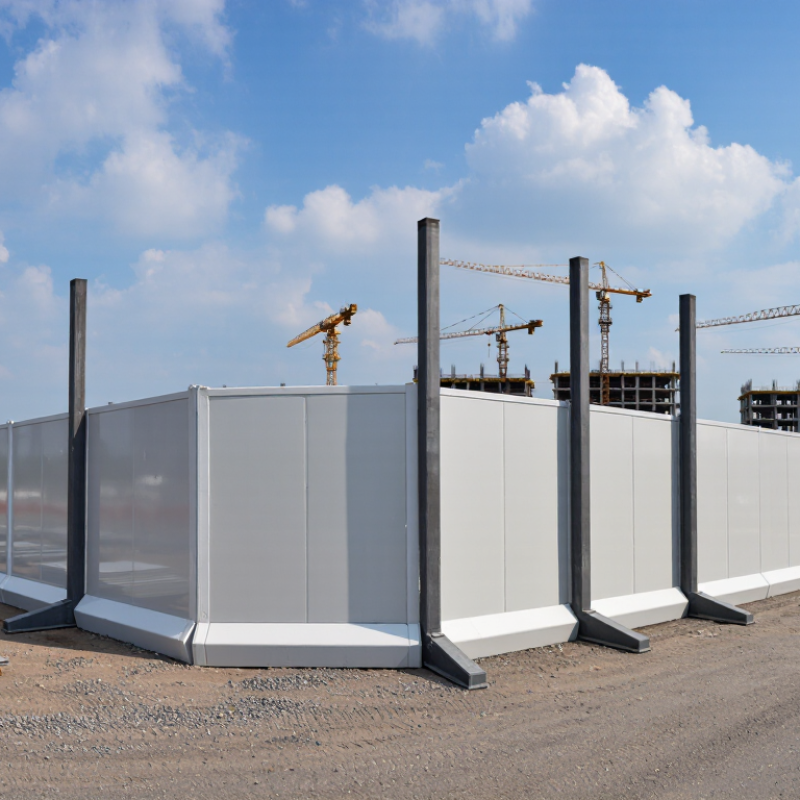
Top 10 Construction Hoarding Panels Suppliers Worldwide

Definition and Role of Construction Hoarding Panels

Construction hoarding panels are temporary wall systems installed around active building sites. They separate workers, equipment, dust, and noise from pedestrians and nearby properties. In practice, they also control access, guide foot traffic, and create a clearer public boundary. Some panels use steel frames with plywood, composite boards, or recycled plastic surfaces. Height, ballast, gates, lighting, and wind resistance must match the site conditions.

Their role is becoming more important as urban construction expands. The Global Construction Perspectives and Oxford Economics report projected global construction output to reach about US$15.5 trillion by 2030. More projects mean more interfaces with roads, shops, schools, and homes. Hoarding therefore supports site safety and project communication, not only visual screening. Printed panels can show pedestrian routes, emergency contacts, and project information without blocking essential visibility.

Sustainability also deserves attention. UNEP’s 2023 Global Status Report for Buildings and Construction stated that the sector produced about 37% of global energy and process-related carbon emissions. Reusable panels, repairable components, and low-waste installation can reduce repeated replacement. Yet specifications are sometimes treated as an afterthought. That is a weakness. A strong-looking barrier may still fail under wind, poor anchoring, or careless gate placement. Site teams should inspect panels after storms, deliveries, and layout changes, because real conditions rarely follow the original drawing.

Key Materials, Designs, and Performance Features

Top 10 Construction Hoarding Panels Suppliers Worldwide

Construction hoarding panels protect workers, pedestrians, and stored materials around active sites. In field inspections, I look beyond surface appearance. The core material often determines service life. Galvanized steel offers strong impact resistance and reliable outdoor performance. Aluminum is lighter, easier to reposition, and useful for temporary projects. Recycled polymer panels resist moisture, although some grades may soften under prolonged heat.

Panel design affects installation speed and site control. Interlocking edges reduce visible gaps and limit wind-driven rain. Folded returns strengthen corners without adding excessive weight. Anti-graffiti coatings support cleaner public-facing boundaries. Printed graphics can improve wayfinding, but poor ink adhesion becomes obvious after several rainy weeks. Small details matter.

Performance testing should include wind loading, corrosion resistance, fire behavior, and repeated handling. Ask suppliers for tested values, installation guidance, and maintenance records. A panel rated for mild conditions may perform poorly near coastal air. I have seen fasteners loosen when installers ignored uneven ground. That mistake is avoidable, but specifications alone cannot replace site experience. Drainage gaps, stable bases, and regular inspections remain essential. Supplier comparisons should also consider replacement availability and regional compliance requirements.

How to Evaluate Global Hoarding Panel Suppliers

Evaluating global hoarding panel suppliers requires more than comparing prices. Start with documented performance. Ask for wind-load calculations, fire-test classifications, acoustic ratings, and corrosion data. These records should match the climate and exposure of your project site. A coastal site needs different protection from an inland renovation. Request recent project references, installation photos, and quality-control procedures. ISO 9001 certification can support consistency, but it does not replace product testing.

Logistics matter just as much. Compare production capacity, export packaging, replacement policies, and realistic lead times. A supplier may promise fast delivery, yet small delays can stop site access and increase labor costs. The 2024 Global Status Report for Buildings and Construction reported that buildings and construction used about 32% of global energy and produced roughly 34% of global carbon emissions in 2022. Therefore, evaluate recycled content, panel reuse, repairability, and end-of-life options. Ask for measurable evidence, not attractive claims.

Cost needs a wider lens. Include transport, storage, labor, cleaning, damage, and disposal. The cheapest panel is not always economical. It can be a false saving. Check whether technical documents are translated accurately and whether local support is available. Suppliers should explain limitations openly, including load restrictions and installation tolerances. No supplier is perfect. Your evaluation may still miss hidden risks, especially during extreme weather. A scored comparison matrix, site trial, and independent inspection can reduce that uncertainty.

Top 10 Construction Hoarding Panels Suppliers Worldwide - How to Evaluate Global Hoarding Panel Suppliers

An anonymized comparison framework for evaluating international construction hoarding panel suppliers by material capability, technical documentation, compliance evidence, logistics readiness, customization, and service performance.

Rank Anonymous Supplier Profile Primary Supply Region Common Panel Materials Typical Panel Formats Surface and Finish Options Technical Evidence to Request Compliance Documentation Customization Capability Typical Production Lead Time Export and Logistics Capability Evaluation Score
01 Global Profile A East Asia; worldwide export Galvanized steel Aluminium HDPE Standard modular panels; pedestrian gates; vehicle gates Pre-painted, powder-coated, galvanized, printed graphics Panel thickness, weight, wind-load calculations, connection details Material certificates; coating data; fire-performance test where applicable High: dimensions, colors, access openings, graphics, fixings Approximately 3–6 weeks after approved drawings Container loading plans; export packing; port delivery support 9.2 / 10
02 Global Profile B Western Europe; regional and overseas supply Plywood OSB Steel framing Timber hoarding sheets; framed site screens; reinforced gate units Film-faced, painted, laminated, anti-graffiti coating Timber grade, moisture resistance, frame spacing, fixing schedule Chain-of-custody evidence where claimed; product safety documentation Medium to high: panel sizes, paint systems, signage zones Approximately 2–5 weeks for standard configurations Strong regional delivery; palletized export packing available 8.9 / 10
03 Global Profile C North America; domestic and international projects Steel Composite panels Polycarbonate Temporary walls; security screens; transparent viewing panels Galvanized, powder-coated, clear, tinted, translucent Structural calculations, impact resistance, anchoring method, service loads Project-specific engineering package; local code references High: engineered layouts, doors, windows, graphics, security options Approximately 4–8 weeks depending on engineering scope Detailed installation manuals; jobsite delivery coordination 8.7 / 10
04 Global Profile D South Asia; containerized international supply Pre-painted steel Corrugated sheet Cement board Corrugated site panels; solid privacy screens; framed partitions Color-coated, galvanized, textured, cement-finish Steel grade, coating mass, panel gauge, fastener specifications Factory quality plan; batch inspection records; coating reports Medium: standard sizes with optional colors and printed panels Approximately 4–7 weeks after order confirmation Experienced with full-container orders and export documentation 8.4 / 10
05 Global Profile E Oceania; regional project supply Steel Aluminium Mesh Temporary fencing panels; solid hoarding; mesh security screens Hot-dip galvanized, powder-coated, welded mesh, privacy fabric Wind-region design data, ballast requirements, post spacing, stability checks Installation guidance; workplace safety documentation; test records Medium to high: gates, corners, ballast systems, access control openings Approximately 2–6 weeks for stocked or semi-standard products Strong site-delivery planning; limited long-distance customization 8.2 / 10
06 Global Profile F Middle East; regional and project-based export Galvanized steel Insulated panels Aluminium High-privacy hoarding; climate-resistant screens; access gates UV-resistant coating, powder-coated, reflective, insulated finish Thermal performance, corrosion resistance, wind-load data, anchorage details Coating specifications; fire classification where relevant; inspection reports High: climate-specific coatings, branding zones, security accessories Approximately 4–8 weeks depending on project quantity Regional warehousing; export support for large project shipments 8.0 / 10
07 Global Profile G Eastern Europe; European and nearby export markets OSB Plywood Steel Timber screens; steel-post hoarding; reusable site panels Painted, film-faced, laminated, galvanized components Panel rigidity, fixing method, reuse cycles, moisture protection Timber documentation; coating certificates; quality inspection records Medium: cut-outs, panel dimensions, colors, signage integration Approximately 3–6 weeks for standard product families Efficient road freight; export packing for palletized shipments 7.8 / 10
08 Global Profile H Latin America; national and regional supply Galvanized steel Fiber cement PVC-coated mesh Solid perimeter panels; mesh fencing; dust-control screens Painted, galvanized, weather-resistant, printed mesh fabric Corrosion resistance, wind exposure, anchoring, drainage provisions Local compliance records; material and coating declarations Medium: standard modules, access gates, color selection Approximately 4–9 weeks depending on material availability Strong local distribution; international export varies by project 7.6 / 10
09 Global Profile I Africa; regional project and infrastructure supply Steel Wire mesh Timber Security hoarding; mesh barriers; temporary site compounds Galvanized, painted, PVC-coated, treated timber Security rating, post embedment, ballast, gate hardware, maintenance needs Inspection checklists; treatment records; installation procedures Medium: project layouts, gate positions, security enhancements Approximately 5–10 weeks for imported or engineered orders Project freight coordination; port and inland delivery planning 7.4 / 10
10 Global Profile J Multi-region contract manufacturing network Steel Aluminium composite Recycled polymer Reusable modular walls; branded construction screens; event hoarding Recycled-content, powder-coated, laminated, digitally printed Recycled-content data, structural performance, color durability, reuse guidance Environmental declarations where available; batch traceability Very high: graphics, modular layouts, doors, windows, signage systems Approximately 5–10 weeks depending on artwork and production location Multi-origin sourcing; shipment consolidation; project logistics support 7.2 / 10

Evaluation scores are benchmark ratings based on commonly requested supplier-selection criteria. Before procurement, verify current quotations, test reports, structural calculations, applicable local regulations, delivery commitments, warranty terms, and installation requirements for the specific project.

Regional Overview of the Top Ten Suppliers

Top 10 Construction Hoarding Panels Suppliers Worldwide

The leading ten suppliers are spread across North America, Europe, Asia-Pacific, and the Middle East. North American producers often focus on heavy-duty panels for busy urban sites. Their systems commonly use reinforced boards, steel frames, and weather-resistant coatings. European suppliers tend to emphasise modular design, lower waste, and cleaner visual finishes. These features matter near residential streets and protected public spaces.

Asia-Pacific suppliers are strong in scalable production and short fabrication cycles. Many provide printed panels, acoustic barriers, and reusable site fencing for large developments. Regional climate affects panel selection. Coastal projects need corrosion-resistant fittings, while tropical sites require reliable protection against heavy rain and humidity. Middle Eastern suppliers usually prioritise heat resistance, dust control, and rapid installation. Practical experience shows that delivery timing can matter as much as panel strength.

No ranking stays fixed.

Supplier quality should be checked through material data, project references, factory inspections, and clear warranty terms. A credible supplier should explain fire performance, wind-load limits, fixing methods, and replacement procedures without vague promises. Site teams should also inspect sample panels before ordering hundreds of units. Printed surfaces may look impressive, yet fade quickly under strong sunlight. Some comparisons remain too neat because they ignore local transport, storage, and installation skills. That is a weakness worth acknowledging. The best regional choice is not always the cheapest quotation; it is the system that performs consistently under the project’s actual weather, access, and maintenance conditions.

Applications, Compliance, and Purchasing Considerations

Top 10 Construction Hoarding Panels Suppliers Worldwide

Construction hoarding panels create a controlled boundary around active work areas. They protect pedestrians, reduce dust movement, and hide sensitive operations from public view. Applications vary from city-center renovations to large infrastructure sites. A panel near a school may need better impact resistance and cleaner graphics. Temporary storage yards may prioritize fast installation and easy relocation. Windy locations require stronger framing, deeper anchors, and verified load data.

Compliance should guide the specification, not decorate it afterward. Check local planning rules, fire-performance requirements, accessibility clearances, and wind-load calculations before ordering. Panels should not block emergency routes, drainage channels, signs, or visibility at crossings. Ask suppliers for test reports, material declarations, installation drawings, and maintenance instructions. Documentation matters. Verbal assurances are weak evidence.

Purchasing teams should compare the complete system, not only the panel price. Include posts, gates, fixings, delivery, installation, repairs, and removal. Reusable panels can reduce waste, but only when they survive repeated handling. Inspect coating thickness, edge protection, joint alignment, and printed-surface durability. A practical mistake is choosing a lightweight system for a highly exposed site. It may look economical until the first strong wind. Supplier response time also deserves attention. Damaged sections need replacement quickly, especially beside busy footpaths. I would request a sample panel before approving a large order. Small flaws become expensive across hundreds of meters.

Construction Hoarding Panels: Common Formats and Purchasing Considerations

The chart compares representative nominal panel sizes commonly specified for temporary construction hoarding. Plywood, corrugated steel, composite, and PVC foam panels are widely used for site separation, pedestrian protection, screening, signage, and visual management. Actual availability, fire performance, structural requirements, wind resistance, and permitted dimensions must be verified against local regulations and project specifications.

Data basis: representative nominal market dimensions in millimetres, not supplier-specific specifications. Before purchasing, confirm panel thickness, fixing systems, wind-load design, fire classification, accessibility requirements, reuse potential, and disposal or recycling arrangements.

FAQS

Which materials are commonly used for construction hoarding panels?

Galvanized steel handles impacts and outdoor exposure well. Aluminum is lighter and easier to reposition. Recycled polymer resists moisture, but some grades soften in prolonged heat.

How does panel design affect installation?

Interlocking edges reduce gaps, wind-driven rain, and visible openings. Folded returns strengthen corners without adding much weight. Good design can shorten installation time.

What performance tests should buyers request?

Request wind-load data, corrosion results, fire classifications, and repeated-handling evidence. Acoustic ratings may matter near schools or busy roads. Test values should match local conditions.

How should panels be selected for coastal or windy locations?

Coastal sites need stronger corrosion protection and suitable fasteners. Windy areas may require stronger frames, deeper anchors, and verified load calculations. A mild-weather rating may fail there.

What documents should a supplier provide?

Ask for test reports, installation drawings, material declarations, and maintenance instructions. Recent project references and installation photos can reveal practical quality. Verbal promises are weak evidence.

What costs should be included beyond the panel price?

Include posts, gates, fixings, transport, storage, labor, repairs, and removal. Cleaning and disposal also affect the final cost. The cheapest panel may be a false saving.

Can reusable panels reduce environmental impact?

Reusable panels can reduce waste when they survive repeated handling. Check recycled content, repair options, and end-of-life plans. Reuse sounds attractive, but durability must prove it.

What site details should be checked before installation?

Keep emergency routes, drainage channels, signs, and crossing visibility clear. Stable bases and drainage gaps are essential. I have seen loose fasteners follow uneven ground.

How can buyers reduce supplier and weather risks?

Use a scored comparison matrix, sample panel, site trial, and independent inspection. Confirm replacement availability and realistic lead times. Even careful planning can miss extreme-weather problems.

Conclusion

Construction Hoarding Panels are temporary or semi-permanent barrier systems used to secure construction sites, separate work areas, protect the public, and support site organization. This article explains their role in improving safety, privacy, access control, and visual presentation around active projects. It reviews common materials such as steel, aluminum, composite boards, and engineered plastics, along with important design and performance features including durability, weather resistance, fire performance, modular installation, sound reduction, and options for signage or printed graphics.

The guide also presents practical methods for evaluating international suppliers, including product quality, manufacturing capability, customization services, delivery reliability, technical support, and compliance documentation. A regional overview compares supplier strengths across major global markets without focusing on individual brands. It further discusses applications in urban development, infrastructure, commercial construction, and public projects, while highlighting purchasing considerations such as site conditions, panel dimensions, installation systems, maintenance needs, project duration, budget, and applicable safety and building requirements.

Elara

Elara

Elara is a professional marketing specialist dedicated to helping businesses understand how thoughtful solutions, reliable service, and customer-focused innovation can create lasting value. With a deep understanding of the company’s products, market dynamics, and customer needs, Elara regularly......