Prefabricated & Modular Building Blog
Latest industry updates, technical insights, and buying guides on portable cabins, containers, and cold storage units.
Portacabins & Site Office Solutions
Discover best practices and custom configurations for relocatable site offices and modular staff quarters.
Flat Pack Cabin Assembly & Logistics
Explore rapid deployment techniques and cost-efficient modular housing options for remote work sites.
China Top Prefabricated Utility Buildings Suppliers
Table of Contents
- Definition and Scope of Prefabricated Utility Buildings
- Key Types of Utility Buildings Manufactured in China
- Materials, Design Standards, and Construction Methods
- How to Evaluate Chinese Prefabricated Building Suppliers
- Leading Supplier Selection Criteria and Purchasing Process
- FAQS
- Conclusion
- Related Posts
China’s leading Prefabricated Utility Buildings suppliers are changing how essential infrastructure is delivered. These buildings support substations, pump stations, water treatment systems, laboratories, and remote industrial sites. Their value is practical: faster installation, controlled factory quality, and reduced disruption at busy locations.
Jennifer Siegal, an architect and recognized prefabrication researcher, stated, “Prefabrication is not a style; it is a process.” This idea matters when comparing Chinese manufacturers. A reliable supplier should provide more than attractive factory photographs. Buyers need verified material specifications, structural calculations, fire-resistance documentation, and clear production records. They should also examine waterproofing details, ventilation systems, cable routes, insulation thickness, and lifting points. Small details matter.
On site, a well-designed unit arrives with accurate openings, protected finishes, and clearly marked connection points. That can save valuable installation hours. However, modular construction is not automatically efficient. Poor coordination can create expensive modifications. Sometimes, the “fast solution” becomes slower.
This guide introduces China Top Prefabricated Utility Buildings Suppliers through practical evaluation criteria, including engineering capability, customization, quality control, export experience, and after-sales support. It also considers compliance with local building, electrical, fire, transport, and environmental requirements. Supplier claims should be checked against drawings, test reports, project references, and independent inspections. No supplier is perfect. The strongest companies acknowledge limitations, explain technical risks, and improve their designs after real project feedback. For buyers, that honesty may be more valuable than polished marketing.
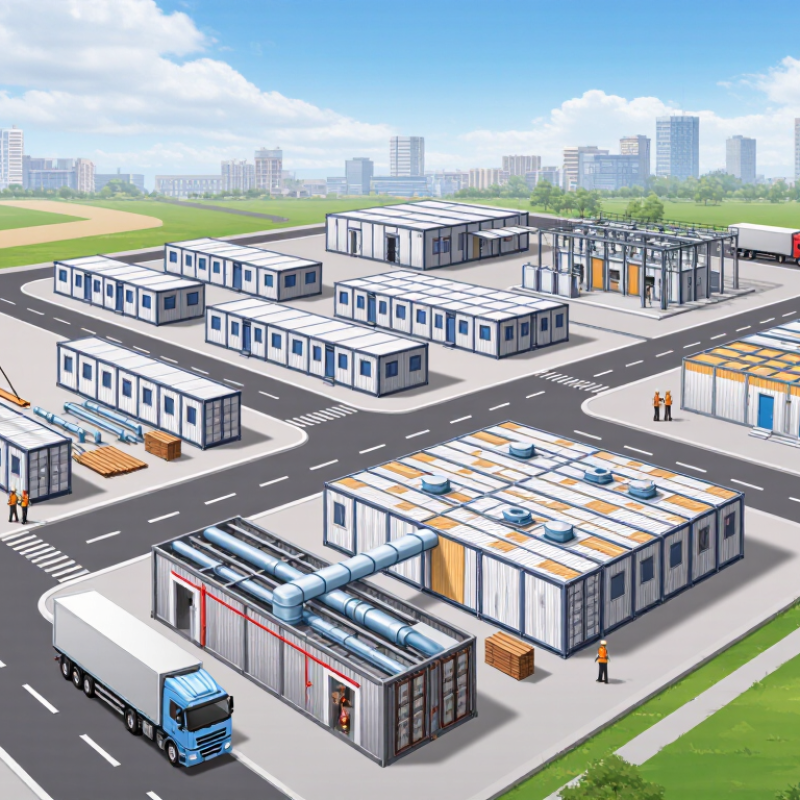
Definition and Scope of Prefabricated Utility Buildings
Prefabricated utility buildings are factory-made enclosures for essential technical equipment. They protect electrical, mechanical, communication, and control systems from weather, dust, and unauthorized access. Unlike ordinary storage rooms, these structures support safe operation, maintenance, and equipment life.
The term usually covers modular substations, pump houses, control rooms, battery rooms, and compact service buildings. Their scope may include insulated panels, fire-rated walls, ventilation, cable trenches, lifting points, lighting, and drainage. Some units arrive almost complete, while others need local assembly and final connections. The category is not perfectly tidy.
Strong installations require practical engineering from the beginning. During planning, teams should check equipment heat output, cable routes, door clearance, foundation loads, and transport limits. A six-meter module may fit the factory plan but fail at a narrow site entrance. Small details matter. Suppliers should provide drawings, material records, inspection reports, and clear installation instructions. Factory testing can verify wiring, controls, alarms, and enclosure quality before shipment. Local engineers must still confirm building, electrical, fire, and environmental requirements.
The scope also depends on the project’s operating conditions. Coastal sites may need stronger corrosion protection. Cold regions require heating and freeze protection. Remote locations may demand extra access control and backup power. Experience shows that a low initial price can hide difficult maintenance later. Buyers should examine service access, spare parts, repair procedures, and future expansion space before approving a design.
Key Types of Utility Buildings Manufactured in China
China’s prefabricated utility buildings cover many practical site requirements. Common types include guardhouses, site offices, pump houses, equipment rooms, and maintenance workshops. Manufacturers also produce transformer enclosures, telecom shelters, and compact water treatment buildings. Each unit is designed around its equipment, access needs, and local climate.
Steel frames provide structural strength with efficient factory assembly. Insulated sandwich panels help control indoor temperatures and reduce construction time. Pump houses usually need reinforced floors, drainage channels, ventilation, and removable service panels. Electrical buildings require careful cable routing, grounding provisions, and separation between equipment zones. Small details matter.
Factory production allows dimensional checks before delivery. Inspectors should review weld quality, panel joints, door alignment, roof drainage, and protective coatings. Transport lifting points also deserve attention. A building may look complete but still fail if cable openings or maintenance clearances were overlooked. No design is perfect. Site conditions often expose assumptions made in the workshop. Experienced suppliers therefore confirm drawings, load requirements, fire expectations, and installation methods before production. Clear records improve reliability.
China Top Prefabricated Utility Buildings Suppliers - Key Types of Utility Buildings Manufactured in China
The chart presents indicative planning floor areas commonly used for prefabricated utility building layouts. Actual dimensions vary according to equipment, access requirements, local codes, and project specifications.
Typical applications include site security, electrical equipment protection, process control, water and wastewater pumping, and substation operations. The figures are indicative planning benchmarks rather than company sales or market-share data.
Materials, Design Standards, and Construction Methods
China Top Prefabricated Utility Buildings Suppliers
Materials, design standards, and construction methods determine whether a utility building performs reliably for years. Steel frames offer strength and fast assembly, while insulated panels improve temperature control. Concrete bases must match soil conditions, drainage needs, and equipment loads. Materials should resist corrosion, moisture, vibration, and local weather exposure.
Design teams should verify structural calculations, fire resistance, electrical protection, ventilation, and accessibility requirements. Local building codes remain essential because standards differ between regions and project types. A practical layout leaves clear service paths around pumps, transformers, cables, and control panels. Field experience shows that rushed measurements often create costly door and maintenance problems. One weakness is assuming factory precision removes every site risk.
Tips: Confirm dimensions before fabrication. Request material certificates and inspection records. Use sealed joints in wet areas. Plan lifting routes early. Keep spare access space around critical equipment. Review drawings with installers, not only designers. A perfect plan rarely survives the first site inspection.
Construction usually combines factory fabrication with on-site foundation work and modular installation. Bolted connections can shorten assembly time and simplify future replacement. Welded joints may provide strength, but they require qualified procedures and careful inspection. Weather delays, uneven foundations, and missing conduits can still disrupt schedules. Suppliers should provide installation drawings, tolerances, testing procedures, and maintenance guidance. Reliability depends on coordination, not appearance alone.
How to Evaluate Chinese Prefabricated Building Suppliers
China Top Prefabricated Utility Buildings Suppliers
How to Evaluate Chinese Prefabricated Building Suppliers
Choosing a Chinese prefabricated utility building supplier requires more than comparing prices. Review their factory capacity, engineering team, and completed projects. Ask for drawings, material specifications, and quality records before signing any agreement. A reliable supplier should explain steel grades, insulation performance, fire resistance, and electrical provisions clearly. Request photographs from production and installation stages. Better still, arrange an independent factory inspection.
Examine whether the building suits your site conditions. Check transport limits, lifting points, foundation requirements, drainage, and local building codes. For a six-meter module, even a small dimensional error can delay crane placement. Confirm tolerances in writing. Ask how the supplier controls welding, coating thickness, waterproof joints, and moisture protection. Samples are useful, but production consistency matters more. A polished showroom may hide weak site procedures.
Tips: Compare at least three suppliers using the same technical brief. Verify references from projects with similar weather and usage. Request a detailed delivery schedule, inspection plan, warranty terms, and spare-parts list. Do not accept vague claims such as “international standard.” Name the exact standard and testing method. Also, leave room for honest uncertainty. Some suppliers communicate well but underestimate installation time. A trial assembly or third-party inspection may cost more, yet it can reveal problems before shipment.
Leading Supplier Selection Criteria and Purchasing Process
Selecting China’s top prefabricated utility buildings suppliers requires more than comparing quotations. The McKinsey report Modular Construction: From Projects to Products states that modular methods can shorten project schedules by 20–50% and reduce costs by up to 20%. These figures are useful benchmarks, not guarantees.
Check engineering capability, factory quality controls, and experience with utility buildings. Ask for structural calculations, fire ratings, insulation values, corrosion protection details, and evidence of compliance with the destination country’s standards. A reliable supplier should explain steel grades, welding procedures, electrical integration, and weather sealing clearly. Request a factory audit, material certificates, and inspection records. Small details matter.
Keep the process practical. Share site dimensions, wind loads, snow loads, equipment layouts, delivery access, and installation limits before requesting a firm price. Compare quotations by total cost, including packing, transport, lifting, commissioning, spare parts, and warranty support. Grand View Research reported that the global modular construction market reached approximately USD 91.36 billion in 2022, with continued growth projected through 2030. Competition is expanding, but purchasing mistakes remain expensive.
Use staged approvals: concept design, technical drawings, prototype review, production inspection, factory acceptance testing, and final handover. Hold a pre-shipment inspection. Include measurable acceptance criteria in the contract. I would not rely on attractive catalog images alone. Even experienced buyers sometimes overlook drainage, cable entry positions, or local maintenance access. That deserves a second review.
FAQS
Common types include guardhouses, site offices, pump houses, equipment rooms, and maintenance workshops.
Steel frames provide strength and support fast factory assembly.
A pump house often needs a reinforced floor, drainage channels, and ventilation.
Electrical buildings need organized cable routing, grounding provisions, and separated equipment zones.
Inspect welds, panel joints, door alignment, roof drainage, and protective coatings.
Share site dimensions, wind loads, snow loads, equipment layouts, and delivery access.
Factory fabrication is combined with foundation work and modular installation on site.
Compare the complete cost, including packing, transport, lifting, commissioning, spare parts, and warranty support.
Use staged approvals for concept design, technical drawings, prototype review, and production inspection.
No. Site conditions may expose assumptions made during workshop production.
Conclusion
Prefabricated Utility Buildings are factory-made structures designed to support essential services such as power distribution, water treatment, telecommunications, equipment storage, and site operations. This article explains their scope, functional requirements, and the main types manufactured in China, including electrical substations, pump rooms, control centers, guard facilities, and modular storage units. It also reviews common materials, including steel, concrete, insulated panels, and corrosion-resistant finishes, along with design standards, safety considerations, factory production, transportation, and on-site assembly methods.
For buyers, selecting a reliable Chinese supplier requires careful evaluation of engineering capability, manufacturing quality, certifications, customization options, delivery capacity, installation support, and after-sales service. The purchasing process should begin with a clear technical brief and site assessment, followed by supplier comparisons, design confirmation, quotation review, prototype or factory inspection, contract negotiation, quality testing, and delivery planning. A structured approach helps ensure that the chosen building meets operational needs, local regulations, budget expectations, and long-term durability requirements.

Blog Tags: