Prefabricated & Modular Building Blog
Latest industry updates, technical insights, and buying guides on portable cabins, containers, and cold storage units.
Portacabins & Site Office Solutions
Discover best practices and custom configurations for relocatable site offices and modular staff quarters.
Flat Pack Cabin Assembly & Logistics
Explore rapid deployment techniques and cost-efficient modular housing options for remote work sites.
Top 10 Temporary Fencing Sheets for Global Buyers
Table of Contents
- Temporary Fencing Sheets: Purpose, Structure, and Common Applications
- Key Materials and Sheet Types Used in Temporary Fencing
- How to Compare the Top Ten Fencing Sheet Options
- Global Safety Standards, Weather Resistance, and Compliance Factors
- Purchasing, Shipping, and Supplier Evaluation for International Buyers
- FAQS
- Conclusion
- Related Posts
Choosing the right Temporary Fencing Sheets can shape safety, workflow, and public confidence on a busy site. Global buyers often compare more than price. They examine material strength, wind resistance, visibility, portability, and installation time. A sheet that works beside a calm warehouse may fail near an exposed coastal project. Context matters.
Daniel Mercer, an independent temporary-works safety consultant, says, “A fence sheet is effective only when its strength, visibility, and installation suit the site.” This practical view guides the selection in this article. Each option is considered through real purchasing concerns, including panel weight, mesh structure, corrosion resistance, fixing methods, and compatibility with common temporary fencing systems. Clear edges matter. So does safe handling.
The top ten products are not ranked by appearance alone. They are assessed for repeated use, storage convenience, weather exposure, and dependable site coverage. Some sheets offer excellent screening but reduce airflow. Others are lightweight yet feel less robust during strong gusts. That trade-off deserves attention. No product fits every project.
Buyers should still confirm local specifications, supplier documentation, and professional installation requirements before ordering. Product descriptions can sound stronger than field performance. Samples help. A close inspection may reveal sharp edges, weak eyelets, uneven coating, or difficult connection points. Small details often become expensive problems.
This guide aims to make comparison clearer for contractors, event planners, facility managers, and international distributors. It does not replace a site-specific risk assessment. It supports better questions, better checks, and more practical decisions when selecting Temporary Fencing Sheets for demanding environments.
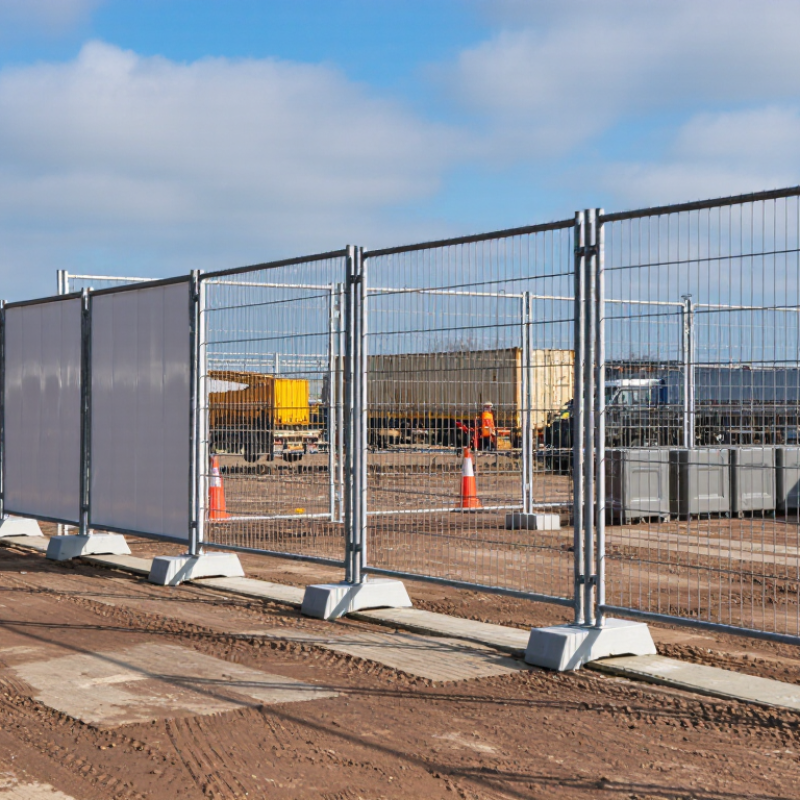
Temporary Fencing Sheets: Purpose, Structure, and Common Applications
Temporary fencing sheets are modular panels used to create controlled boundaries on changing sites. They help separate workers, visitors, vehicles, stored materials, and open ground. In practical use, a sheet is more than a visual barrier. It guides movement and reduces accidental entry.
Common options include galvanized steel, welded wire, and durable mesh. Material choice affects visibility, weight, corrosion resistance, and handling speed.
Dense mesh can limit access and debris movement, while open wire improves sightlines.
A typical system includes a framed sheet, clamps, base feet, and connecting pins. The frame provides stiffness, while the feet distribute load across the surface. Connectors keep adjoining panels aligned during wind, contact, and daily relocation.
Some projects add privacy fabric, warning signs, or screened sections. These additions need secure fastening. Loose fabric may catch wind and transfer stress to the frame. That detail is easy to underestimate.
Applications include construction zones, road maintenance, public events, utility work, warehouse expansion, and temporary storage areas.
Site managers should check ground conditions, panel spacing, access gates, and emergency routes before installation. Regular inspections should identify bent frames, damaged welds, unstable feet, and missing connectors.
No sheet is universally suitable. Lightweight panels move easily, but exposed areas may need stronger anchoring. Selection should reflect project duration, weather, visibility needs, and handling resources.
In field practice, rushed layouts often create more problems than the sheets themselves. Small gaps can undermine the whole boundary.
Key Materials and Sheet Types Used in Temporary Fencing
Top 10 Temporary Fencing Sheets for Global Buyers
Temporary fencing sheets vary widely in strength, weight, privacy, and weather resistance. Galvanized steel sheets offer strong impact resistance and reliable outdoor performance. Corrugated steel sheets add stiffness without becoming excessively heavy. Solid steel panels provide high privacy around construction areas, storage zones, and public events. Perforated metal sheets allow airflow while limiting visibility. Expanded metal sheets are useful where ventilation and moderate security matter. Aluminum sheets reduce handling weight, but they may dent more easily.
Several plastic-based options suit different site conditions. High-density polyethylene sheets resist moisture, corrosion, and many common chemicals. PVC-coated polyester fabric is flexible and easier to transport. Reinforced PVC sheets can provide privacy, though sharp edges may damage poorly finished surfaces. Polycarbonate sheets transmit light and resist breaking, but their cost can be higher. Mesh sheets, including welded wire and woven fabric types, improve visibility and wind flow. They are not ideal where full privacy is essential.
Material thickness, edge treatment, eyelets, and fastening points deserve close inspection. A thick sheet can still fail if its frame bends. Wind exposure changes the required support design. This is often underestimated. Buyers should request test data, surface-finish details, and installation guidance from suppliers. Local climate, handling equipment, recycling plans, and applicable safety requirements also affect the best choice. In practice, no single sheet type fits every project. A lighter panel may save labor, yet require more frequent replacement.
Top 10 Temporary Fencing Sheets for Global Buyers
Key Materials and Sheet Types Used in Temporary Fencing
This chart compares common temporary fencing sheet and panel types by their typical commercial height. Heights vary by region, project requirements, wind conditions, and local safety regulations. The list represents widely used material categories rather than a sales ranking.
How to Compare the Top Ten Fencing Sheet Options
Top 10 Temporary Fencing Sheets for Global Buyers
How to Compare the Top Ten Fencing Sheet Options
Global buyers should compare fencing sheets by performance, not appearance alone. A 2024 construction outlook from Global Construction Perspectives and Oxford Economics projects worldwide construction output to reach about 15.5 trillion dollars by 2030. That growth increases demand for fast, reusable site barriers. Start with material thickness, sheet weight, mesh opening, coating quality, and panel compatibility. HDPE sheets are lightweight and resist moisture. PVC options offer smooth surfaces and simple cleaning. Steel sheets usually provide stronger impact resistance, but they add transport weight.
Wind performance needs closer attention. A solid sheet can act like a sail on exposed sites. Check tested wind-load data, anchoring instructions, and the support-frame spacing. EN 1991-1-4 provides a recognized method for assessing wind actions, while local engineering rules may require higher safety factors. Do not accept “heavy duty” without measured values. Ask for tensile strength, tear resistance, UV-aging results, and temperature ranges. A 2023 industry report on temporary site infrastructure identified durability and reuse as major purchasing factors, but the figures vary by region and testing method. That limitation matters.
For ten competing options, use one comparison sheet. Record weight per square meter, installation time, expected service cycles, repair method, and shipping volume. Inspect sample edges and fastening holes. Small defects become large failures. I would also score cleaning effort, because muddy panels slow relocation. Price alone misleads. A cheaper sheet may require earlier replacement, extra bracing, or more labor. Some data remains incomplete, so buyers should request independent test records before placing large orders.
Global Safety Standards, Weather Resistance, and Compliance Factors
Top 10 Temporary Fencing Sheets for Global Buyers
Choosing temporary fencing sheets requires more than comparing prices. The right material must match local safety rules, weather exposure, and site risks. Common options include galvanized steel, coated steel, aluminum, HDPE, PVC, mesh, fire-retardant polymer, acoustic composite, privacy fabric, and recycled plastic panels. Each option performs differently under wind, impact, sunlight, and moisture.
Global buyers should request test reports for structural strength, UV stability, corrosion resistance, and flame behavior. European projects may reference EN requirements, while other markets may use ASTM or national standards. These systems are not automatically interchangeable. Check panel height, base weight, connection strength, and spacing with a qualified site engineer. A fence beside a coastal road needs stronger corrosion protection than one used indoors. High-wind areas also require engineered ballast and anchoring.
Weather resistance affects service life. Look for sealed edges, reinforced corners, drainage paths, and coatings suitable for the climate. I have seen attractive sheets warp after one hot season because thermal movement was ignored. That mistake is easy to repeat. Ask whether recycled content changes impact performance or certification status. Keep inspection records for damaged panels, loose feet, and faded warning signs. Worker visibility matters too. A private barrier can improve security, but poor visibility may increase vehicle risks. Compliance is a continuing process, not a label printed on the packaging.
Purchasing, Shipping, and Supplier Evaluation for International Buyers
Top 10 Temporary Fencing Sheets for Global Buyers
International buyers should compare fencing sheets by project use, not appearance alone. The ten practical choices include welded wire, chain-link, corrugated steel, perforated steel, plastic mesh, privacy fabric, galvanized panels, painted panels, sound-reducing sheets, and lightweight composite boards. Each option affects protection, visibility, weight, and freight cost.
Start with thickness, opening size, coating, edge strength, and panel dimensions. Ask for a physical sample before placing a large order. A sample can reveal sharp edges, weak welds, uneven coating, or inaccurate measurements. That mistake is common. Confirm the packing method, bundle weight, pallet size, and container loading plan. Flat panels may need stronger protection against bending. Rolled mesh usually saves space, but unloading can become difficult without suitable equipment.
Shipping documents should match the actual goods, quantities, and materials. Request commercial invoices, packing lists, product specifications, and available test reports. Check the destination’s import requirements with a qualified customs broker. Supplier evaluation needs more than a low quotation. Review production capacity, inspection procedures, response time, replacement terms, and previous export experience. A polished catalog is not proof. Ask for production photographs, independent inspection support, and a clear tolerance statement. Prices may change after steel or freight fluctuations, so confirm validity in writing. No sheet is ideal. A heavier option may improve stability but increase handling costs, and that trade-off deserves careful review.
Top 10 Temporary Fencing Sheets for Global Buyers - Purchasing, Shipping, and Supplier Evaluation for International Buyers
The configurations below represent commonly available temporary site-fencing products and screening options. Dimensions, materials, coatings, and weights vary by market and supplier; confirm the final specification, applicable local requirements, and packed dimensions before ordering.
| No. | Product type | Typical materials and configuration | Common size or specification | Suitable applications | Purchasing and shipping considerations | Supplier evaluation checks |
|---|---|---|---|---|---|---|
| 1 | Welded-wire temporary fence panel | Welded steel wire mesh in a tubular steel frame; commonly hot-dip galvanized or galvanized after fabrication. | Common panel formats include approximately 2.0–2.4 m high and 2.0–3.5 m wide. Mesh opening and wire diameter are specified separately. | Construction sites, road works, events, and general perimeter control. | Panels can be nested or stacked. Confirm stack count, pallet or stillage dimensions, protective packing, and total gross weight for freight planning. | Request wire diameter, mesh opening, frame-tube dimensions, coating details, weld inspection criteria, and a sample panel or production photos. |
| 2 | Chain-link temporary fence panel | Chain-link fabric secured to a metal frame, typically with galvanized wire and steel frame tubes. | Panel sizes vary by region; ask for finished height and width, mesh size, wire gauge, and frame-tube dimensions rather than relying on a generic nominal size. | Temporary construction boundaries, utility work, and sites needing a flexible mesh perimeter. | Check whether fabric edges are secured against loosening during handling. Confirm that frames, bases, clamps, and other accessories are packed as separate line items. | Verify the chain-link coating, fabric tension, frame weld quality, connector compatibility, and availability of replacement parts. |
| 3 | Anti-climb welded mesh panel | Steel wire mesh with smaller openings than standard site mesh, mounted in a rigid steel frame. | Opening size, wire diameter, panel height, and frame construction should be agreed in the order specification; no single dimension is universal. | Sites requiring a more difficult-to-climb perimeter, such as infrastructure and restricted work areas. | Rigid panels may need more careful stacking and edge protection. Confirm loading method and whether the package can be safely lifted by forklift. | Check opening dimensions, wire and frame specifications, weld consistency, corrosion protection, and the stated security application. |
| 4 | Corrugated steel temporary hoarding sheet | Profiled steel sheet, commonly galvanized or pre-painted, fixed to a supporting frame or site structure. | Sheet thickness, profile, cover width, and length are order-specific. Confirm effective cover width, not just overall sheet width. | Visual screening, site hoarding, and temporary separation where a more solid barrier is needed. | Long sheets can affect container loading and may be vulnerable to bending. Specify sheet lengths, bundle dimensions, edge protection, and unloading requirements. | Request base-metal thickness, coating or paint specification, profile drawing, cut-edge protection details, and a clear statement of whether framing is included. |
| 5 | Framed solid temporary fence panel | Solid or near-solid metal infill fixed within a reusable steel frame; construction varies by design. | Panel height, width, infill thickness, and frame dimensions are project-specific; obtain a dimensioned drawing before approval. | Temporary screening, visual privacy, and work areas where open mesh is unsuitable. | Solid panels catch more wind than open mesh. Confirm the intended support system, base arrangement, and any project-specific wind-load assessment before installation. | Check frame rigidity, infill attachment, corrosion protection, connection details, and whether the proposed system has suitable engineering documentation for the site. |
| 6 | Privacy-screen mesh for fence panels | Knitted or woven polyethylene (PE) or similar polymer mesh attached to an existing temporary fence. | Sold in rolls or cut panels. Confirm roll width and length, fabric weight, color, and stated shade or screening rating. | Reducing visibility and containing some windblown dust or light debris; it is not a substitute for a solid, engineered barrier. | Rolls can be space-efficient, but the mesh and fasteners may need separate packing. Confirm UV-resistance claims, packaging dimensions, and the number of ties supplied. | Ask for fabric composition, weight per area, UV-stability information, edge reinforcement, and any test method used for screening claims. |
| 7 | Fire-performance screening fabric | Temporary mesh or fabric screen with a stated fire-performance treatment or classification, depending on the product. | Available in rolls or cut sizes. Confirm the exact classification, test standard, and whether the result applies to the supplied fabric and color. | Projects where the site specification or local authority requires documented fire performance for temporary screening. | Check import and project documentation requirements in the destination market. Keep certificates and product identification linked to the delivered lot. | Require current test reports from a competent laboratory, traceable product identification, treatment details, and written confirmation of the tested configuration. |
| 8 | Acoustic barrier sheet or blanket | Multi-layer temporary acoustic material, often combining a sound-absorbing layer with a heavier sound-blocking layer and reinforced outer facing. | Usually supplied as panels or rolls. Compare stated dimensions, surface mass, layer construction, and acoustic test results on a like-for-like basis. | Temporary noise-control installations around construction or maintenance work, when supported by a suitable site design. | Can be bulky and heavier than ordinary screen mesh. Confirm roll or package dimensions, handling requirements, and whether hanging hardware is included. | Request laboratory test reports identifying the test method and sample construction; check seams, eyelets, weather resistance, and repair instructions. |
| 9 | Plastic temporary barrier panel | Moulded polymer panel, commonly designed to interlock or connect with compatible feet or support bases. | Panel dimensions, base design, and connection method vary. Ask for the assembled footprint and not only the panel’s nominal height and width. | Pedestrian guidance, event queuing, and low-risk area separation; suitability depends on the site and local rules. | Confirm whether panels nest for transport, whether bases are packed separately, and whether the polymer is suitable for the expected temperature and outdoor exposure. | Check material identification, connection strength, stability instructions, UV-resistance claims, and availability of matching replacement bases and connectors. |
| 10 | Temporary fence accessories and replacement sheets | Compatible items may include clamps, couplers, feet, braces, tie wire, fasteners, and replacement mesh or infill. | Compatibility depends on panel frame dimensions, connection design, and the specific fence system. | Installation, repair, and maintenance of temporary fence systems. | Accessories are easy to overlook in freight planning. List quantities and packaging separately, and protect small hardware against loss or corrosion. | Confirm compatibility with the ordered panels using drawings or samples; check materials, finish, supplied quantity, and spare-parts availability. |
FAQS
They create controlled boundaries around changing sites. They separate workers, visitors, vehicles, materials, and open ground. They also guide movement and reduce accidental entry.
A typical system includes framed panels, base feet, clamps, and connecting pins. The frame adds stiffness. The feet spread pressure across the ground.
Common materials include galvanized steel, welded wire, coated steel, aluminum, mesh, and durable plastic. Material choice affects weight, visibility, corrosion resistance, and handling speed.
Consider wind, sunlight, moisture, temperature changes, and nearby salt exposure. Coastal sites may need stronger corrosion protection. High-wind areas may require engineered ballast and anchoring.
Check ground conditions, panel spacing, access gates, and emergency routes. Confirm that feet sit firmly and connectors lock correctly. Small gaps can weaken the boundary.
Inspect them regularly, especially after strong wind, impact, or relocation. Look for bent frames, damaged welds, unstable feet, and missing connectors. Keep inspection records.
Yes, but it needs secure fastening. Loose fabric may catch wind and stress the frame. This detail is easy to underestimate.
No. Privacy can improve security, but poor visibility may increase vehicle and pedestrian risks. Open wire often provides clearer sightlines. There is no perfect option.
Request test reports for structural strength, ultraviolet stability, corrosion resistance, and flame behavior. Also confirm local requirements with a qualified site engineer. Certificates alone may not explain every site risk.
Conclusion
This guide introduces Temporary Fencing Sheets as practical solutions for controlling access, improving site safety, and creating flexible boundaries for construction zones, public events, infrastructure projects, and other temporary environments. It explains how fencing sheets are structured, including panels, frames, supports, connectors, and visibility features, while comparing common materials such as steel, plastic, composite, and coated metal. Readers will learn how to evaluate the top ten options based on strength, weight, installation efficiency, reusability, privacy, and maintenance needs.
The article also examines weather resistance, surface protection, wind stability, fire considerations, and alignment with relevant regional safety and compliance expectations. For international buyers, it provides guidance on product specifications, quantity planning, packaging, shipping dimensions, customs documentation, supplier communication, quality inspection, lead times, and after-sales support. Together, these factors help buyers select reliable Temporary Fencing Sheets that balance performance, cost, transport efficiency, and suitability for different operating conditions.

Blog Tags: