Prefabricated & Modular Building Blog
Latest industry updates, technical insights, and buying guides on portable cabins, containers, and cold storage units.
Portacabins & Site Office Solutions
Discover best practices and custom configurations for relocatable site offices and modular staff quarters.
Flat Pack Cabin Assembly & Logistics
Explore rapid deployment techniques and cost-efficient modular housing options for remote work sites.
Top Industrial Cold Rooms Manufacturers Worldwide
Table of Contents
- Industrial Cold Rooms: Definition, Functions, and Main Applications
- Key Technologies Used in Modern Industrial Cold Room Systems
- Leading Industrial Cold Room Manufacturers Worldwide
- How to Compare Industrial Cold Room Manufacturers and Products
- Global Standards, Energy Efficiency, and Future Industry Trends
- FAQS
- Conclusion
- Related Posts
Choosing among the top Industrial Cold Rooms manufacturers worldwide requires more than comparing prices or panel thickness. Buyers must examine temperature stability, insulation performance, refrigeration design, hygiene, monitoring, and after-sales support. A reliable room should protect products at midnight, during loading, and through unexpected power interruptions.
Professor Judith Evans, a respected refrigeration researcher, has observed, “Energy efficiency must be considered throughout the life of a refrigeration system.” Her point remains practical. A poorly sealed door can waste energy every day. A weak alarm can expose a full stockroom before staff notice. Experienced manufacturers therefore combine tested components, accurate controls, documented installation procedures, and service teams that understand local operating conditions.
The strongest suppliers usually provide more than a prefabricated box. They assess product loads, ambient temperatures, traffic patterns, floor drainage, cleaning routines, and future expansion. Some also offer remote monitoring and maintenance contracts. These details matter in meat processing, pharmaceuticals, hospitality, and fresh produce distribution.
However, no manufacturer is perfect. Published efficiency figures may come from controlled tests, not a busy warehouse. Installation quality can change real performance. This is where careful evaluation becomes necessary. Buyers should request project references, warranty terms, energy data, certification records, and clear response times for breakdowns.
The following guide compares leading global manufacturers through these practical criteria. It considers technology, customization, reliability, sustainability, and user experience. Rankings can still be subjective. Regional service capacity may matter more than brand reputation. That uncomfortable detail deserves attention.
Industrial Cold Rooms: Definition, Functions, and Main Applications
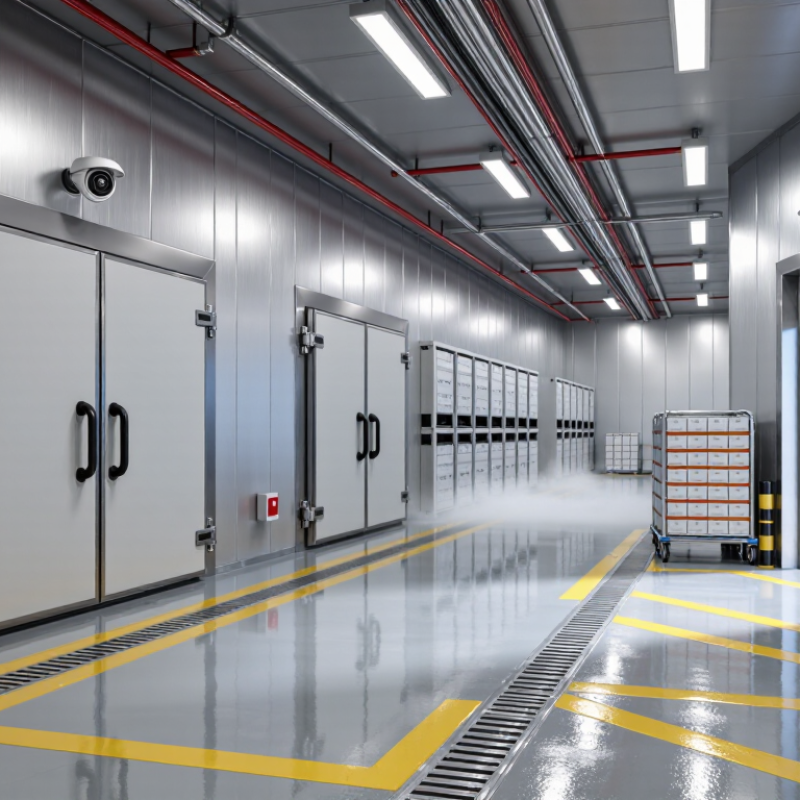
Industrial cold rooms are insulated, temperature-controlled spaces designed for large-scale storage. They use refrigeration equipment, insulated panels, doors, sensors, and airflow systems. It is engineered space. Temperatures may range from chilled conditions above freezing to deep-frozen storage below -18°C. The correct range depends on the product, packaging, and storage period.
Their main function is to slow spoilage and protect product quality. Stable temperatures help limit bacterial growth, moisture loss, texture changes, and unnecessary waste. In practical operation, staff monitor digital readings, door openings, defrost cycles, and humidity. A well-designed room also supports safe loading, clear product rotation, and reliable cleaning. Details matter. Poor airflow can create warm corners, even when the control panel shows the correct temperature.
Industrial cold rooms serve food processing plants, distribution centers, supermarkets, pharmaceutical facilities, laboratories, and agricultural operations. Meat, seafood, dairy products, fresh produce, vaccines, and temperature-sensitive ingredients may require different chamber designs. Manufacturers typically assess site size, local climate, insulation thickness, cooling load, hygiene needs, and maintenance access before production. A specification can look complete, yet overlook delivery traffic or frequent door use. That mistake increases energy consumption. Experienced operators also know that alarms, backup power planning, and routine servicing deserve attention from the beginning. Bigger is not always better. An oversized room may cost more to cool and operate than a carefully calculated system.
Key Technologies Used in Modern Industrial Cold Room Systems
Modern industrial cold rooms depend on coordinated technologies, not refrigeration capacity alone. Variable-speed compressors adjust output as product loads change. Electronic expansion valves improve refrigerant control during fluctuating demand. Carbon dioxide and ammonia systems can reduce high global-warming-potential refrigerant use when properly designed and maintained. ASHRAE Handbook—Refrigeration identifies airflow, temperature control, and defrost management as essential performance factors.
Insulation quality is equally important. A damaged door seal can introduce warm, humid air every time staff enter. That moisture forms ice on evaporators, increasing compressor workload. Thermal sensors, door switches, and cloud-based monitoring now provide faster fault detection. The 2023 UNEP Global Cooling Watch report projects that cooling demand could more than triple by 2050 without efficiency improvements. Energy recovery from compressors may also support hot-water production, although actual savings depend on operating schedules. A perfect model is rare. Real facilities have open doors, uneven loading, and rushed maintenance.
Tips: Keep pallets away from evaporator outlets. Calibrate sensors regularly. Review alarm histories weekly. Measure energy per stored tonne, not only total electricity. The International Institute of Refrigeration reports that refrigeration uses roughly 17% of global electricity, showing why small control losses matter. Operators should also verify refrigerant leakage, defrost timing, and insulation condition against local codes and documented maintenance procedures. Some “smart” systems still underperform when sensors are poorly positioned. That detail deserves honest review.
Top Industrial Cold Rooms Manufacturers Worldwide — Key Technologies Used in Modern Industrial Cold Room Systems
Typical industrial cold-room designs use insulated sandwich panels, high-efficiency compressors, electronic expansion valves, EC evaporator fans, automated defrost control, temperature monitoring, and low-GWP refrigerants. The chart shows representative storage setpoints used across common cold-room applications.
Temperature values are representative engineering setpoints; actual specifications vary according to product type, loading conditions, humidity, door openings, and local regulations.
Leading Industrial Cold Room Manufacturers Worldwide
Leading Industrial Cold Room Manufacturers Worldwide are judged by more than production capacity. They must deliver stable temperatures, hygienic interiors, efficient insulation, and dependable service across challenging climates.
The International Institute of Refrigeration reports that refrigeration consumes about 17% of global electricity. This makes energy performance a practical purchasing concern, not a marketing detail.
Experienced manufacturers now design systems around precise airflow, insulated doors, remote monitoring, and low-leakage refrigeration circuits. The UNEP-led Global Cooling Watch 2023 reports that cooling demand could more than triple by 2050 without stronger efficiency measures.
Therefore, leading suppliers should show tested performance data, lifecycle cost estimates, and clear maintenance procedures. Compliance with relevant safety, food hygiene, and refrigerant regulations also matters. Installation quality matters too.
Small details reveal competence.
A cold room may look impressive during commissioning, yet poor door seals can increase operating loads every day. Manufacturers should provide thermal calculations, pull-down test results, alarm records, and documented factory quality controls.
ISO-based management systems can support reliability, but certificates alone do not prove field performance.
No ranking is perfect. Regional service response, spare-part availability, and technician training are sometimes overlooked. Buyers should compare real operating conditions, including loading frequency, ambient temperature, humidity, and cleaning routines. The best worldwide manufacturers combine engineering evidence with practical support, while remaining transparent about limitations and expected maintenance.
How to Compare Industrial Cold Room Manufacturers and Products
Comparing industrial cold room manufacturers requires more than reviewing advertised capacity. The IIR’s 2019 report estimates about two billion refrigeration systems worldwide, consuming roughly 17% of global electricity. That scale makes efficiency a purchasing issue, not a marketing detail. Ask for tested energy use under your actual ambient temperature, product load, pull-down time, and door-opening frequency. A room rated at -25°C may perform differently when warm pallets enter. Check panel U-values, vapor sealing, floor loading, door heaters, defrost control, and temperature uniformity. Request independent test records, not only laboratory claims.
Product reliability depends on the complete system. Compare compressor modulation, evaporator spacing, controls, alarm logging, backup systems, and refrigerant service requirements. The FAO’s State of Food and Agriculture 2019 reported that 14% of food is lost between harvest and retail. Better cold rooms can reduce waste, but poor loading practices may cancel expensive equipment. Examine five-year lifecycle costs, including electricity, maintenance, spare parts, downtime, and panel replacement. Warranty length helps. Response time matters more during a failed weekend harvest. Field experience often shows that local technicians cannot source simple sensors quickly.
Tips: Build a comparison sheet with identical assumptions. Record daily kWh, recovery time after a ten-minute door opening, noise, and temperatures at different rack levels. Visit an operating installation if possible. Do not accept perfect numbers without conditions. Leave room for human error; operators often load rooms too tightly.
| Comparison Dimension | Typical Industrial Requirement | Recommended Benchmark or Range | Why It Matters | Evidence to Request from a Manufacturer |
|---|---|---|---|---|
| Application Type | Chilled storage, frozen storage, blast freezing, processing areas, loading rooms, or controlled-atmosphere storage. | The room design should match the product, operating temperature, loading frequency, and required pull-down time. | A room designed for stable storage may not provide the refrigeration capacity or airflow required for rapid product freezing. | Application design brief, heat-load calculation, airflow plan, and operating-temperature specification. |
| Operating Temperature | Positive-temperature rooms for chilled goods, negative-temperature rooms for frozen goods, or ultra-low-temperature rooms for specialized products. | Chilled storage: approximately 0 to +5°C; frozen storage: typically −18°C or below; blast freezing: commonly −30 to −40°C air temperature. | Temperature determines panel selection, refrigeration capacity, door design, defrost method, and floor insulation requirements. | Guaranteed design temperature, allowable temperature variation, pull-down time, and test conditions. |
| Panel Insulation Material | Factory-manufactured insulated sandwich panels with a sealed internal core and durable metal facings. | Common insulation cores include polyurethane, polyisocyanurate, and mineral wool; selection should reflect fire, thermal, and hygiene requirements. | The insulation core affects heat transfer, energy consumption, fire performance, weight, and long-term dimensional stability. | Panel construction details, declared thermal conductivity, fire classification, and product test reports. |
| Panel Thickness | Thickness selected according to room temperature, ambient conditions, panel joint quality, and energy target. | Approximately 80–120 mm for many chilled rooms; 100–150 mm or more is common for frozen rooms, subject to engineering calculation. | Insufficient thickness can increase running costs, surface condensation, and the risk of temperature instability. | Thermal-transmittance calculation, panel thickness schedule, joint detail, and cold-bridge treatment. |
| Thermal Performance | Low heat transfer through panels, floors, ceilings, doors, and junctions. | Compare declared U-values or R-values using the same measurement method and operating conditions; lower U-value indicates better insulation. | Thermal performance has a direct effect on refrigeration load and lifecycle energy consumption. | Third-party thermal test data, declared U-value, core density, and calculations for panel joints and fasteners. |
| Hygiene and Surface Finish | Smooth, washable, corrosion-resistant internal surfaces with sealed joints and minimal dirt traps. | Use food-suitable coatings and sealants where required; avoid exposed porous materials inside the room. | Cleanable surfaces help reduce contamination risks and support routine sanitation procedures. | Surface coating specification, sealant compatibility, cleaning instructions, and hygiene-related declarations. |
| Floor Construction | Insulated floor system or insulated building slab designed for the room temperature and traffic conditions. | Frozen rooms commonly require substantial floor insulation and vapor control; structural design must reflect pallet trucks, racks, and stored loads. | Floor failures can cause heat gain, frost heave, cracking, water ingress, and unsafe operating conditions. | Floor build-up drawing, insulation thickness, vapor-barrier detail, compressive-strength data, and allowable floor load. |
| Door Performance | Hinged or sliding insulated doors sized for traffic, pallet movement, and emergency access. | The door should include replaceable gaskets, reliable latches, internal emergency release, and protection against impact where needed. | Doors are a major source of air infiltration and temperature loss, especially in high-traffic facilities. | Door U-value, gasket specification, opening-cycle rating, safety release details, and replacement-part availability. |
| Refrigeration Capacity | Capacity must cover product load, transmission load, infiltration, lighting, personnel, equipment, and pull-down requirements. | Compare capacity at the actual evaporating and condensing conditions rather than using only the nominal compressor rating. | Nominal capacity values can be misleading when operating conditions differ between suppliers. | Heat-load calculation, selection software output, capacity tables, design ambient temperature, and safety margin. |
| Evaporator and Airflow | Air cooler selected for room volume, product sensitivity, air throw, humidity, and allowable air velocity. | Air distribution should minimize hot spots, excessive dehydration, and direct high-velocity air on sensitive products. | Correct airflow improves temperature uniformity and product quality while reducing unnecessary fan energy. | Evaporator selection sheet, airflow rate, fan power, air-throw data, noise level, and temperature-mapping results. |
| Defrost Method | Natural, electric, hot-gas, or water defrost selected according to room temperature, humidity, and operating schedule. | Negative-temperature rooms generally require a controlled defrost strategy and drainage protection against refreezing. | Inadequate defrost can reduce heat-transfer performance, block airflow, and create hazardous ice buildup. | Defrost frequency, duration, control sequence, heater rating where applicable, and condensate-drain design. |
| Refrigerant and Environmental Data | Refrigerant selection should consider safety class, local regulations, efficiency, availability, and service requirements. | Compare refrigerant safety classification, global-warming impact, charge size, operating pressure, and regulatory status in the target market. | Refrigerant restrictions and service requirements vary by jurisdiction and can affect long-term operating cost. | Refrigerant type, safety classification, global-warming data, charge quantity, compliance documents, and service procedures. |
| Temperature Control | Electronic control with sensors, alarms, data logging, and adjustable set points. | The system should provide high- and low-temperature alarms, door-open alarms, sensor-failure alerts, and power-failure notification where required. | Monitoring helps protect inventory and provides traceability during quality audits or incident investigations. | Control-system specification, alarm list, sensor accuracy, data-export format, and remote-monitoring options. |
| Energy Efficiency | Efficient compressors, electronically commutated fans where appropriate, effective insulation, and optimized controls. | Compare annual energy consumption using the same ambient temperature, room volume, product load, set point, and operating hours. | Annual electricity use is often more significant than the initial equipment-price difference. | Energy model, seasonal performance data, compressor operating envelope, fan power, and estimated annual kWh. |
| Structural and Fire Performance | Panels, fixings, supports, and penetrations designed for the building environment and applicable fire requirements. | Confirm the required reaction-to-fire or fire-resistance classification for the project jurisdiction; do not compare classifications from different test systems without verification. | Fire performance, structural stability, and safe penetrations are essential for industrial facilities and insurance approval. | Fire-test reports, classification documents, structural calculations, load tables, and approved penetration details. |
| Compliance and Documentation | Design and installation documentation aligned with applicable refrigeration, electrical, food-safety, and building requirements. | Documentation should identify applicable standards and clearly state which components and services are included in the scope. | Clear documentation reduces approval delays, commissioning disputes, and maintenance uncertainty. | Drawings, bills of materials, conformity declarations, operation manuals, commissioning records, and maintenance schedules. |
| Installation Quality | Qualified installation with correctly aligned panels, sealed joints, protected corners, insulated penetrations, and tested refrigeration pipework. | The completed room should be checked for air leakage, temperature uniformity, drainage, door operation, and refrigeration performance. | Even high-quality components can perform poorly when joints, vapor barriers, or pipework are installed incorrectly. | Installer qualifications, method statement, inspection checklist, pressure-test records, vacuum records, and commissioning report. |
| Maintenance and Serviceability | Accessible refrigeration components, replaceable gaskets, cleanable coils, spare parts, and clear service procedures. | Assess planned-maintenance intervals, expected component life, parts lead times, and local technical support. | Serviceability affects uptime, food safety, emergency-repair cost, and total ownership cost. | Maintenance plan, spare-parts list, warranty terms, response-time commitment, and service-network coverage. |
| Total Cost of Ownership | Evaluation of purchase price, installation, energy, maintenance, refrigerant, downtime, and eventual replacement. | Use a multi-year lifecycle-cost model instead of ranking suppliers by initial price alone. | A lower purchase price may lead to higher energy use, more maintenance, or shorter service life. | Itemized quotation, annual energy estimate, maintenance cost, warranty exclusions, replacement assumptions, and lifecycle-cost calculation. |
Global Standards, Energy Efficiency, and Future Industry Trends
Top Industrial Cold Rooms Manufacturers Worldwide
Global cold-room manufacturing is shifting from simple insulated boxes toward measurable, compliant systems. The International Energy Agency reports that cooling already uses about 10% of global electricity. Its Future of Cooling analysis projects cooling demand could more than triple by 2050. This pressure affects every manufacturer, from panel design to compressor selection.
Standards now shape practical engineering.
EN 378 addresses refrigeration safety, while ISO 5149 covers system safety and environmental considerations. ISO 50001 helps operators measure energy performance instead of trusting estimates. The International Institute of Refrigeration links weak cold-chain infrastructure with significant food losses, and FAO reported that 13.2% of food was lost between harvest and retail in 2021. A well-sealed door, low-emissivity panels, and correctly sized evaporators can reduce waste, but only when installation quality matches the specification.
Future systems will combine natural refrigerants, variable-speed drives, heat recovery, and remote condition monitoring.
The 2023 UNEP Cooling Emissions and Policy Synthesis Report stresses efficiency improvements alongside refrigerant transition. Yet digital controls are not automatically efficient. Poor sensors, unstable internet connections, and untrained staff can create false confidence. Manufacturers should publish tested energy data, maintenance requirements, and operating limits. Buyers should inspect thermal bridges, door heaters, defrost cycles, and alarm records before comparing headline efficiency figures. There is still room for improvement.
FAQS
It is an insulated space with controlled temperature and airflow. It stores large quantities of chilled or frozen products. Temperatures may stay above freezing or below -18°C. The correct setting depends on the product and storage period.
Common products include meat, seafood, dairy items, and fresh produce. Some pharmaceutical materials and laboratory supplies also need controlled storage. Each product may require different humidity and temperature conditions. One setting cannot fit everything.
Stable temperatures slow spoilage, moisture loss, and texture changes. They can also reduce waste during storage and distribution. However, a correct display reading proves very little alone. Warm corners may exist when airflow is poor.
Variable-speed compressors adjust cooling as the stored load changes. Electronic valves help control cooling during changing demand. Sensors track temperature, doors, humidity, and equipment faults. Smart systems still fail when sensors are badly positioned.
Good insulation limits heat transfer through panels and floors. A damaged door seal lets warm, humid air enter repeatedly. That moisture can create ice around evaporators. More ice means heavier compressor work.
Keep pallets away from evaporator outlets. Close doors quickly. Calibrate sensors regularly and review alarm records each week. Measure electricity per stored tonne, not only total consumption. Some savings estimates may be too optimistic.
They should review room size, local climate, insulation thickness, and cooling load. Traffic routes and frequent door openings also need attention. Buyers should inspect defrost cycles, alarm records, door heaters, and maintenance access. A larger room is not always the better choice.
Buyers should check applicable refrigeration, electrical, hygiene, and energy standards. They should request documented maintenance procedures and tested operating limits. Refrigerant leakage, backup power, and emergency alarms deserve early planning. Compliance paperwork alone cannot replace careful installation.
Future systems will combine efficient compressors, heat recovery, natural refrigerants, and remote monitoring. Better controls may reduce energy use and detect faults sooner. Yet unstable internet or untrained staff can weaken digital systems. Human review still matters.
Conclusion
Industrial Cold Rooms are specialized temperature-controlled facilities designed to preserve large volumes of food, pharmaceuticals, chemicals, and other temperature-sensitive products throughout storage and distribution. This summary explains their main functions, including temperature stability, humidity control, air circulation, hygiene management, and reliable product protection. It also introduces essential technologies used in modern systems, such as high-performance insulation, energy-efficient refrigeration units, automated monitoring, smart sensors, rapid cooling, and backup safety systems.
The article provides guidance on evaluating industrial cold room manufacturers and products by considering capacity, temperature range, construction quality, customization, maintenance support, operating costs, and system reliability. It also highlights the importance of global safety and quality standards, environmental responsibility, and energy efficiency. As the industry develops, future trends are expected to include intelligent control platforms, renewable energy integration, low-impact refrigerants, predictive maintenance, modular designs, and improved thermal performance. Together, these developments are helping industrial cold storage become safer, more efficient, and better suited to changing supply chain requirements.

Blog Tags: